Notes From The Record Room: Fugazi’s Albini Sessions
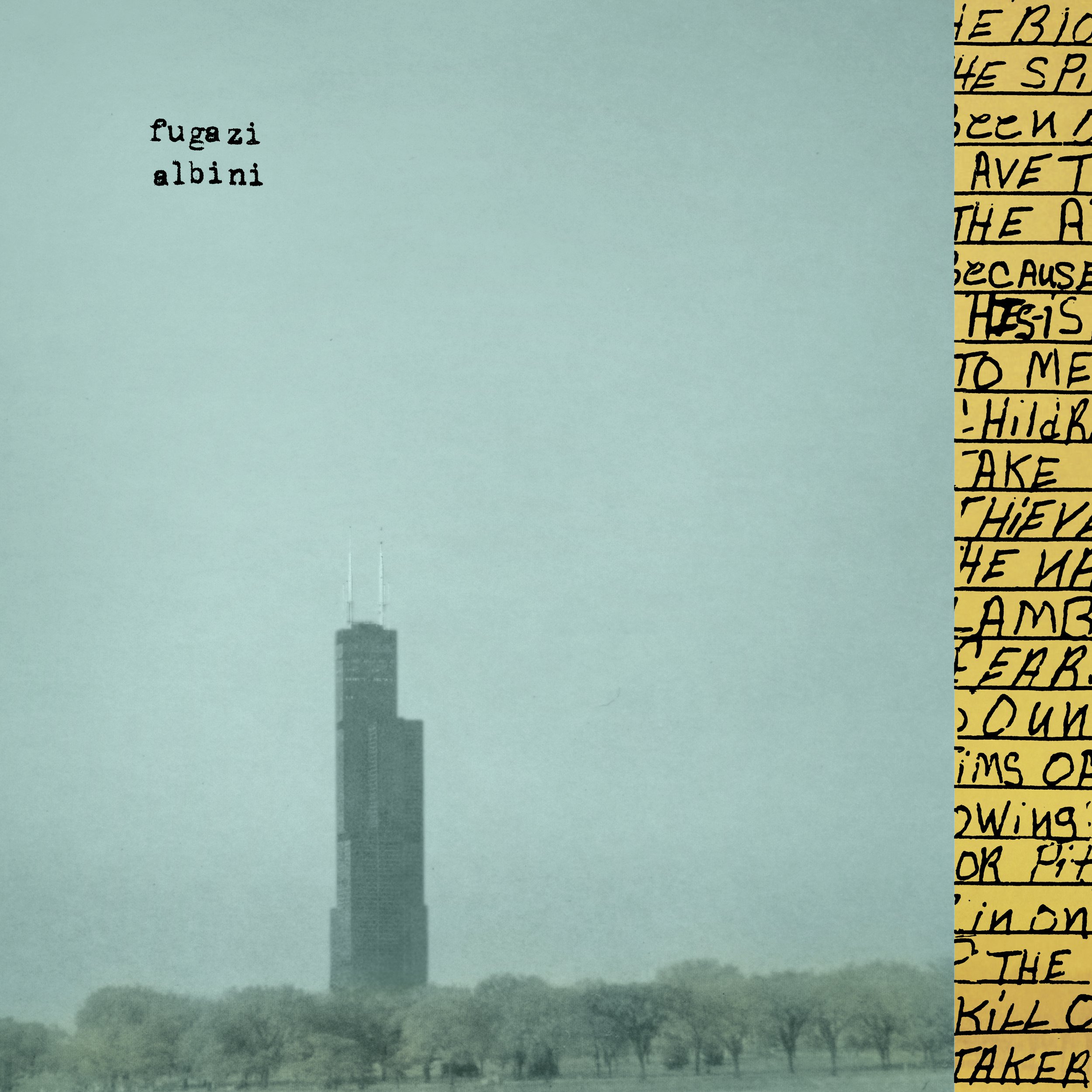
Fugazi
Albini Sessions
Dischord Records
Released: 3/6/25
“Steve had said to us, ‘Any time you guys want to record, I’ll do a free session.’ And at some point we’re like, ‘Why don’t we take Steve up on his fuckin’ offer? We should go up there for a weekend and record a couple of songs and just see what it’s like?’” — Ian MacKaye, (Gross, 2018, p. 51)
For the uninitiated, the virtual record store known as Bandcamp sets aside the first Fridays of a few months out of the year to grant the artists/bands who use the platform a higher percentage of the payout from the records sold. This event is dubbed Bandcamp Friday, and its popularity has been consistent since its inception during the pandemic. For March 2026, Bandcamp Friday arrived with a surprise: Fugazi, D.C.’s post-hardcore progenitors, issued Albini Sessions, a long-ago shelved recording session helmed by Steve Albini featuring material that would ultimately be re-recorded by Ted Nicely for the band’s 1993 LP, In On The Kill Taker.
Prior to Albini’s unfortunate passing in 2024, he, and his partner Heather Whinna, had worked with an organization called Letters Charity, a non-profit whose mission is to provide relief to families experiencing financial hardship. Proceeds from the purchase of Albini Sessions are being donated to this charity in Albini’s honor.
Mastered and released as a digital album, Albini Sessions satisfies decades of fan curiosity (though some leaked and poorly rendered YouTube clips of tracks surfaced online at some point) regarding this marriage of DIY minds: Albini, who, despite his venom-slick tongue and unadulterated and sometimes unwelcome candor, was deemed royalty within Chicago’s noise and indie rock underground, paired with Fugazi—members Ian MacKaye, Guy Picciotto, Brendan Canty, and Joe Lally—whose staunch musical independence (the band turned down a $10 million signing offer from Atlantic Records founder Ahmet Ertegun) and social activism bore both admiration and scorn from audiences and press. By ‘92, Albini’s resume as a producer (or engineer, as he preferred) boasted albums by The Jesus Lizard, Pixies, The Breeders, and albums from his own subversive Pigfuck act, Big Black. For him to collaborate on a Fugazi project, namely one that followed the mixed reception of the band’s second LP, 1991’s Steady Diet of Nothing, the odds were that the results would match the undiluted ferocity of Albini’s other recordings.
However, such was not the case. Though Fugazi’s initial plan had been to only record two songs, the band instead recorded all of the material intended for Kill Taker in three days, procuring mixes on cassettes to listen to on their drive back to D.C. from Albini’s studio in Chicago. Despite how well the sessions went, the payoff didn’t meet expectations. Per author Joe Gross’s 33 1/3 chronicle of In On The Kill Taker:
“A few days after the band listened to the tape but before they had contacted Albini, Albini sent the band a fax essentially agreeing with the band’s assessment: ‘On further listening, I blew it. Please call me so we can figure out a plan to make use of the good stuff.’”
A month later, on December 21st, 1992, Fugazi, with Nicely and engineer Don Zientara, began work on In On The Kill Taker at Zientara’s Inner Ear Studios, where most of the band’s output had been (and would be) recorded. The album hit shelves June 30th, 1993.
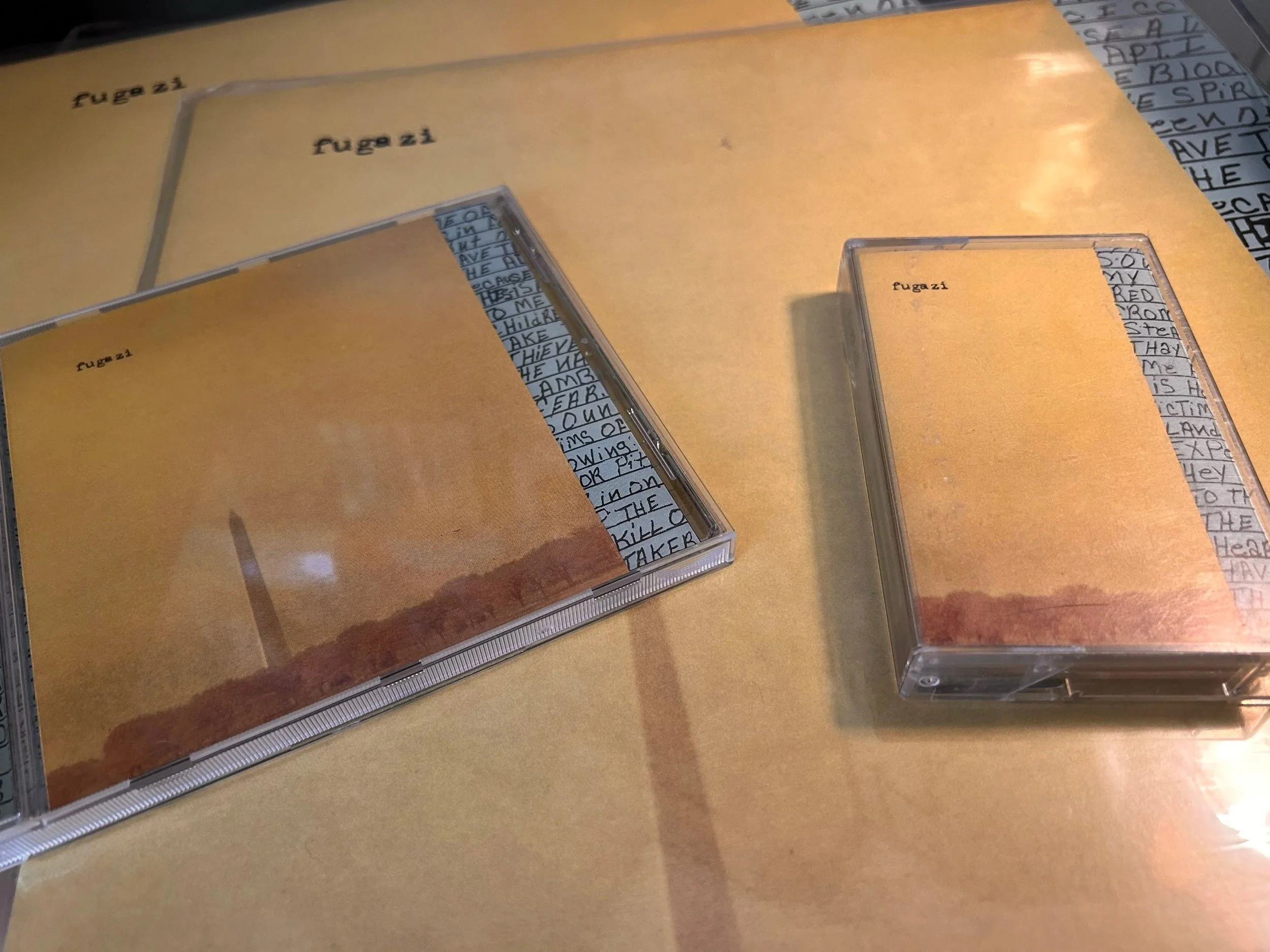
I may have enough copies of In On The Kill Taker at this point.
I’ve already written extensively about Kill Taker and the seismic impact the album had on me once I’d pressed PLAY. Prior to investing time in Albini Sessions, I decided to revisit Kill Taker via my first listen: with the cassette I’d purchased as a 16-year-old at the Surf Mall on the Ocean City, NJ boardwalk. The tape still works, though some wear was audible. While this nostalgic jaunt didn’t offer any new thoughts or feelings for an album that’s been indelibly tattooed onto my gray matter, it worked to have a reference in mind when delving into Albini’s tape.
Bottom line: I agree that these recordings do not meet the quality of the final product, but Albini Sessions is a great demo album.
As has been the case for the last twenty or more years, music fans of my vintage are being continually thrust upon with anniversary editions of whichever and whatever the fuck, padded with extra volumes packed full of discarded odds and ends deemed interesting enough to incentivize fans to own yet another copy of something that’s been heard countless times before. Most of that crap is crap, remnants from the way back machine that may be engaging enough for a single curious listen or two, but rarely more than that. Albini Sessions, though, I’ve returned to a handful of times, at first admittedly offended by the different track sequencing and the overall lack of range in the recordings. Kill Taker has density but also a spatial clarity that enabled the anticipation I felt when I first heard “Facet Squared,” the intensity of “Returning The Screw”’s third act, the urgently insightful weight of “Smallpox Champion,” and the definition of the guitar harmonies that drape over “Sweet And Low”’s rhythm section. It’s difficult sometimes not to be precious about the art you hold near and dear, and I was initially dismissive.
But you don’t gain the full breadth of a piece of work with a single listen. As was unanimously decided thirty-plus years ago by the parties involved, Albini didn’t produce (or engineer) a complete and definitive album. He did, however, capture the band working through material that would eventually comprise one of its landmark releases, its members tearing through each song with cutting precision. Noteworthy is that little had changed in terms of song arrangement from Chicago to Inner Ear; the off-kilter, serpentining bridge of guitar sounds built out in “Returning The Screw” and an altered treatment for the intro of “23 Beats Off” are the most apparent updates (it’s also noticeably shorter, full minutes from the extended feedback-laden outro in absentia). Otherwise, song structures are fairly close aside from a reconsidered lyric or beat placement, though the tempo is faster overall.
“Public Witness Program” is accelerated, a veritable hardcore locomotive driven by Canty’s 50 lb kick pedal and Picciotto’s brillo-grade throat. MacKaye’s vocal performance in “Great Cop” reaches peak force, an already high-tempo Kill Taker offering given a more lacerating tone. The aforementioned “Smallpox Champion” isn’t too dissimilar from the Kill Taker version, though the heightened duress of the live session seems to cause Picciotto’s vocal to sound strained: he can barely take a breath well enough to get through his verses. The same could be said for “Walken’s Syndrome,” whose gallop and approach are also comparable to the version on Kill Taker. Considering how Fugazi’s threshold had seemingly been tested over the course of this productive three-day stretch, it makes sense that Albini Sessions would feature “Sweet And Low” as the album’s closer, acting as the cooldown (though I do still prefer that track as the opener for side 2).
Where the sound falters is with Kill Taker’s more pensive, layered, and inarguably best moments. Albini Sessions opens with “Cassavetes,” an otherwise airy and groove-oriented track whose rhythmic interplay (which is one of the best rhythm section combos from Canty and Lally on the proper album) sounds muddy next to the version on Kill Taker. “Rend It” and “Last Chance For A Slow Dance” also sound rather flat, two of the more passion-bled tracks stuck in midrange. And “Instrument,” one of Fugazi’s best songs from their catalogue, let alone Kill Taker, sounds like a rough draft, which I might attribute more to the band than the recording. Still, as its success leans so heavily on MacKaye’s vocal melody, Lally’s low end, and the dramatic culmination of sounds for its third act, the Sessions version misses the mark.
But for whatever faults can be identified, if I’d seen this version of Fugazi churning through these songs with this much vigor and serrated sonic edge on stage in ‘92, there’s no question that it would’ve been the best show I’d ever seen and that no gig attended in its wake could hold a candle to it. This get-together proved worthwhile, capturing Fugazi early in their indie rock dominance and, by just giving the band space to work and play, revealing how fucking brilliant they were. These storied recordings are now another installment in Fugazi’s essential discography, which remains a top tier inclusion in American rock ‘n’ roll.
Sincerely,
Letters From A Tapehead