In The Headphones: Zu’s Ferrum Sidereum
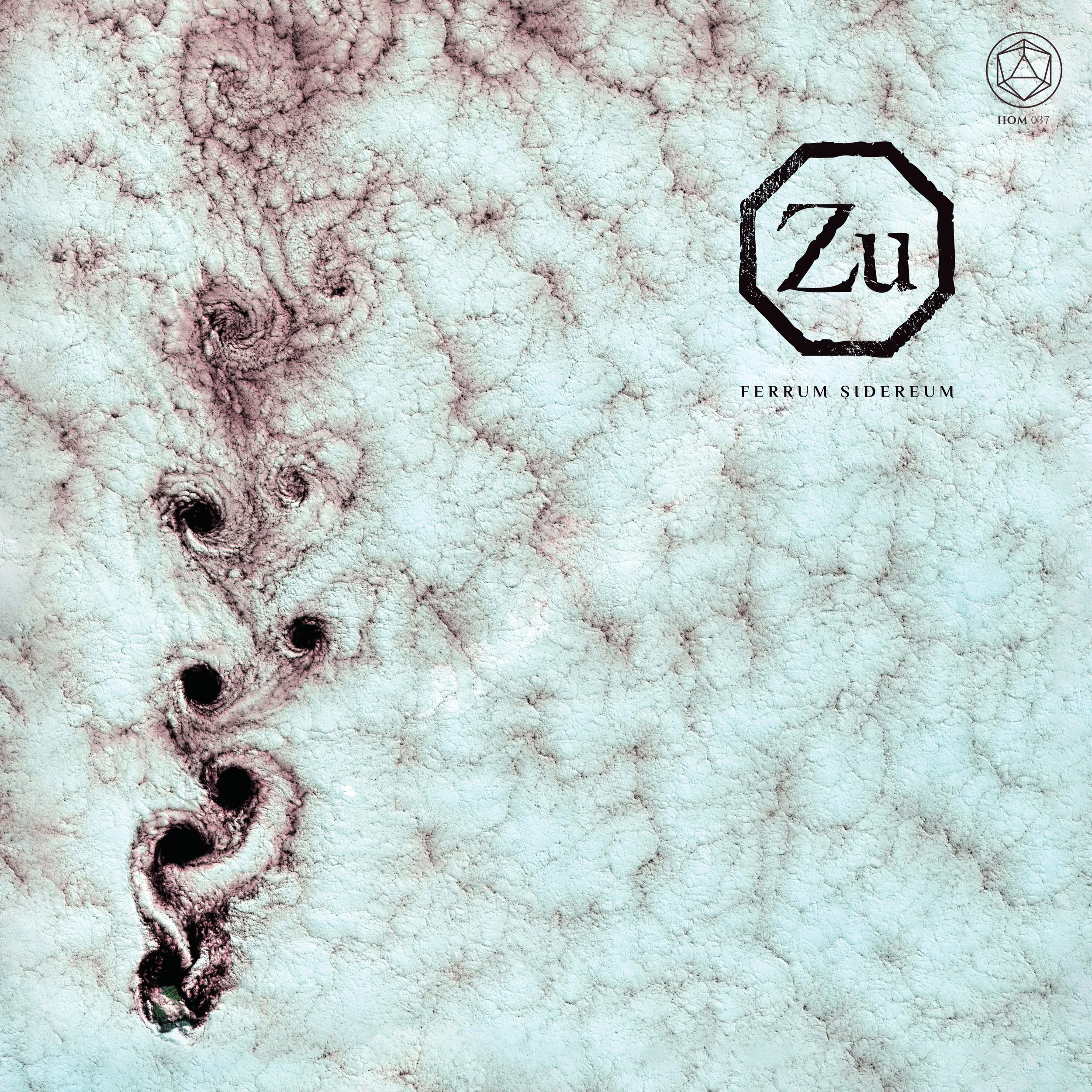
Zu
Ferrum Sidereum
House Of Mythology
Released: 1/9/26
As the need for one-size-fits-all categorization of stylistic nuance is called into question when discussing music, it’s still worth pondering where the line between progressive and improvisation becomes obscured, where evident virtuosity perhaps becomes mistaken or confused for unbridled exploration of sound. Jazz can be both, which is why the genre continues to be a breeding ground for both refinement via composition and chaos via experimentation. Consider Zu’s classification then as jazz gargantua, the trio’s sonically prismatic and intense jams suited to shock, twist, and stun with their sometimes spacious and always relentless fusion of metallic hard bop, feral calculus, and dark electronics. Ferrum Sidereum (Latin for “cosmic iron”) is the trio’s latest offering and there isn’t a wasted minute to be heard. The wartime tumult of baritone brass and quaking low end that composes opening track “Charagma” sets an immediate precedent for intensity that Zu impressively maintains throughout the album’s 80-minute runtime.
Zu—drummer Paolo Mongardi, saxophonist/keyboardist Luca T Mai, and bassist Massimo Pupillo—harnesses a metallic vastness akin to a band like Ufomammut and the wild and impassioned flourishes of a pillar of the jazz avant-garde like Charles Gayle, both of which fuel the violent and precise experimentalism at work. “Kether,” for instance, demonstrates how hostility can sound when it’s well-arranged and set to a boil, some bold but seamless breaks in the energy (the band transitions into reggae rhythms and progressive layering a little after the halfway mark) varying the intensity. “A.I. Hive Mind” is muck-addled and restless, a dizzying Goblin-evocative epic buzzing with electronics and busy flange effects coupled with acoustic elements and heavy percussion. “La Donna Vestita Di Sole” is a pleasure to listen to in a set of headphones, the sharp stabs of Mai’s baritone and Pupillo’s bass chug following Mongardi’s punctuating drum fills are exact, the last act of the song stretched into ethereal tones and splashes of echoing gong. “Pleroma”’s eerie disposition again brings to mind film scoring, a scene patiently set as perceived and ensuing action slowly manifests via electro-beats, chimes, and tar-thick static, hand drums introduced before the ensuing combination of snare, bass, and scribbling sax intensify.
Punishingly immense (“Golgotha”), rigorously meticulous (“Flucco Saturnio”), and psychedelically pensive (“The Celestial Bull and the White Lady”), Ferrum Sidereum’s longest offering, “Hymn of the Pearl,” is the album’s post- track of either the rock (Tortoise) or metal (Neurosis) variety. Persistent and layered, not as prone to signature changes or abrupt tonal shifts, “Hymn of the Pearl” is a treatise on how to build gradual, sonic force, Zu cultivating a high-decibel, viscous atmosphere through addition and elongation of instrumental elements. As grand as it is, it could’ve been the outro.
But, it’s not: “Perseidi” is a tonal interlude preceding the album’s equally grand, albeit more aggressive, title track. A sinister bass riff reverberates and drum sticks begin to count off while a weeping blanket of synthesizer is layered beneath. Heavy drum-’n’-sax improv takes effect as the bass melody holds anchor, a momentary lapse of choral harmony interrupting before the heft is brought back. Swirling brass and blasting rhythms carry the album to a close, an explosive tumble cut to deafening silence.
Ferrum Sidereum is available for purchase via the group’s Bandcamp and the band’s label, House Of Mythology.
Sincerely,
Letters From A Tapehead
P.S. I reviewed the Public Guilt (R.I.P.) reissue of Zu’s 2005 album, The Way of the Animal Powers, for No Ripcord in 2010. That review can be found at No Ripcord’s archive site.